
My lab is currently working on the following projects. I am always looking for students either on the undergraduate or graduate level who want to join my lab and work on one of the projects. If you are interested, do not hesitate to contact me. I am also open for developing new projects.
Human and insect health in urban environments
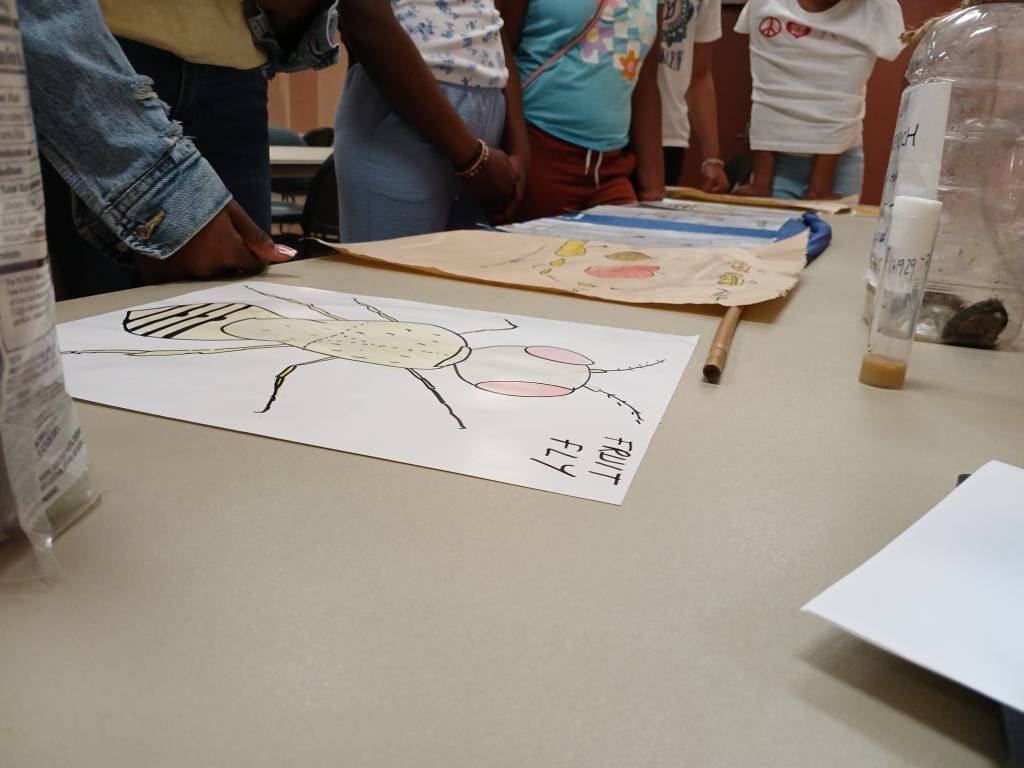
Cities and urban structures are not homogenous but differ in their development and in the access and resources they provide to its residents. These effects can impact human health, insect fitness and biodiversity. Using fruit flies and ants, we study how insect fitness and urban ecosystem biodiversity is influenced by urban development. This work utilizes a multidisciplinary approach including behavioral experiments, physiological assays, RNA and microbiome sequencing combined with a rigid outreach and citizen science approach (see MEM-FLY).

Species interactions in urban environments
The African Fig Fly Zaprionus indianus originates from tropical Africa and invaded the Americas in the late 90s (Brazil) and early 2000s (Florida). During its migration throughout North America, it invades habitats already occupied by established and locally adapted fly communities. We use this ongoing invasion of Z. indianus to study how newly arriving flies navigate competition imposed by other flies, the effects of Z. indianus‘ presence on established flies, and ongoing adaptations allowing Z. indianus to continue its spread.


Chemical mate choice copying in flies
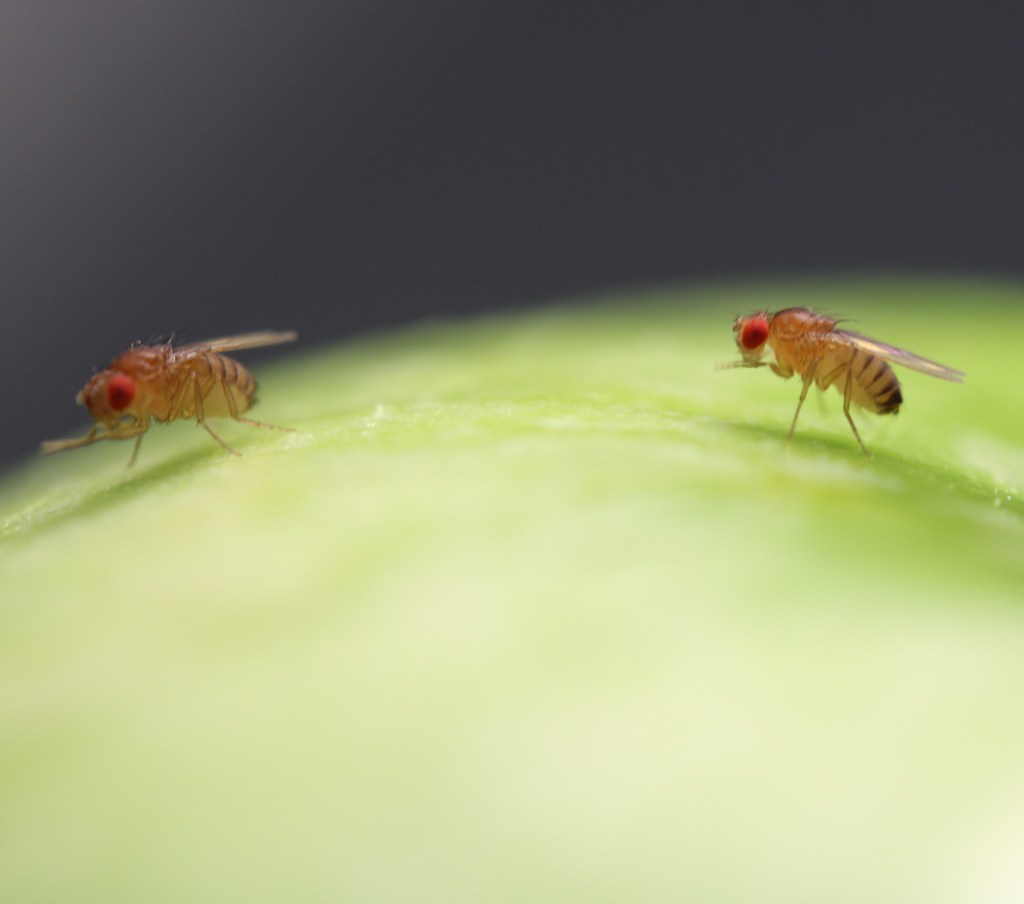
In many animal species, mating decisions are not solely based on individual preferences but are also influenced by social interactions. Mate choice copying allows individuals to utilize social information to quickly identify high quality mates. While typically studied in the context of visual cues, we described the first case of chemical mate choice copying in Drosophila melanogaster.
To dissect the mechanisms that underlie chemical mate choice copying, we use a combination of behavioral experiments, neurogenetic tools, and chemical ecology. These approaches help us understand how individuals process social cues, how copying behaviors are shaped by ecological and social contexts, and how these behaviors influence mate choice decisions on group levels. By studying mate choice copying, we aim to uncover the mechanisms that link individual decision-making to group behavior.
The social and genetic mechanisms regulating foraging preferences
In many social insects such as ants, foraging duties are taken over by a subset of workers, i.e. the foragers. Thus, which nutrients foragers search for is not only influenced by their own physiological demands but also by the demands of their non-foraging nestmates including the larvae. Nutritional demands of larvae change throughout their life cycle and protein consumption typically peaks during a short time window before pupation. As foragers, e.g. for hygienic reasons, avoid direct physical contact with the brood, it raises the question of how they gather information about the food demands of larvae.
We use a combination of field work, behavioral experiments, colony manipulations, RNA-sequencing and chemical techniques to understand how larvae signal their demands, how these signals reach the foragers and how they influence neuronal and genetic networks in the foragers to induce behavioral adaptations.

 kohlmeierlab.com